






Let's be honest. The world does not need another business. It needs another brand.
Businesses sell things. Brands make people feel something. And in a market where your competitor is one Google search away, what people feel about you is often the only thing standing between you and being completely forgettable.
This branding guide is the only one you need to read. We are going to cover what branding actually is, why it matters more than most businesses realise, how brand identity and brand strategy work together, what it takes to build a brand story worth telling, and how to find a branding agency that actually knows what it is doing. By the time you finish reading this, you will know exactly what to do and exactly what to stop doing.
Let's get into it.
Key Takeaways
1. Branding is the deliberate process of shaping perception. It is not just a logo or a colour palette. It is a complete system of visual, verbal, and experiential signals that add up to a feeling in the minds of your audience.
2. The importance of branding for business is measurable. It builds trust, drives brand awareness, enables premium pricing, reduces the cost of growth, and creates long-term brand value that compounds over time.
3. Brand identity is the designed expression of your brand. It covers logo, colour, typography, visual language, and tone of voice and it only works when it is built as a system grounded in strategy.
4. Brand strategy comes before brand design. Positioning, purpose, values, personality, and audience must be defined first. Without this foundation, brand identity is just decoration.
5. How to build a brand follows a clear sequence: discovery, strategy, identity, guidelines, activation, and ongoing management. Get the sequence right and the results compound.
6. A compelling brand story positions the customer as the hero, not the brand. It starts with a real problem, uses specificity and honesty to build credibility, and lives consistently across every touchpoint.
7. The role of branding in marketing strategy is to give every campaign a strong, consistent platform. Strong branding makes marketing more efficient, more effective, and more durable.
8. The best branding agencies lead with strategy, have a clear process, produce work that is distinctive and purposeful, and communicate with honesty throughout.
What Is Branding? And Why Most People Get It Wrong
Ask ten people what branding is and nine of them will say something about logos. They are not entirely wrong. But they are not right either.
So what is branding, really?
Branding is the deliberate process of shaping perception. It is every decision you make, visual, verbal, experiential, that influences how people think and feel about your business. It is the reason someone picks you over a competitor who does essentially the same thing. It is the reason a coffee shop with an unremarkable product builds a line around the block while a technically superior one sits empty. It is the reason people pay three times more for one bottle of water over another.
Jeff Bezos put it better than most: your brand is what people say about you when you are not in the room. That is the outcome. Branding is the work you do to influence what they say.
Branding in marketing is not a campaign. It is not a one-time logo project. It is not what your designer made for you last year. Branding is an ongoing, strategic commitment to showing up consistently, communicating clearly, and building trust at every touchpoint. It covers your brand identity, your brand story, your positioning, your personality, your promise, and your values. All of it, working together, all the time.
And when it works? People do not just buy from you. They believe in you.
The Importance of Branding: This Is Where the Real Money Is
Here is something the spreadsheet crowd often misses: the importance of branding is not soft. It is not a nice-to-have creative exercise for businesses that have already figured everything else out. It is a direct driver of revenue, margin, retention, and growth.
Let us talk about why.
The importance of branding for business starts with trust. In a world drowning in options, people default to what they recognise and what feels credible. Strong brand awareness creates that recognition. Consistent branding builds that credibility. And credibility closes deals faster, reduces friction in the sales process, and makes every marketing channel more efficient.
Then there is pricing power. Strong branding is literally how businesses charge more for the same thing. Two skincare brands. Same ingredients. One is packaged in generic white with a forgettable name. One has a beautifully crafted brand identity, a compelling brand story, and a community of loyal customers who talk about it unprompted. The second one charges four times more and sells out first. That is brand value, and it is built entirely through intentional branding work.
Brand awareness also compounds in a way that paid media simply cannot. Every piece of content you publish, every customer experience you deliver, every consistent visual impression you make is adding to a growing asset. The longer you invest in building a strong brand, the cheaper your growth becomes. That is the importance of branding for long-term business performance in a single sentence.
And beyond customers? Strong branding attracts better talent, creates stronger partnerships, makes fundraising easier, and builds the kind of organisational clarity that makes scaling less chaotic. The importance of branding touches every part of a business. It just does not always get credit for it.
Brand Identity: The Visual and Verbal System That Makes Your Brand Instantly Recognisable
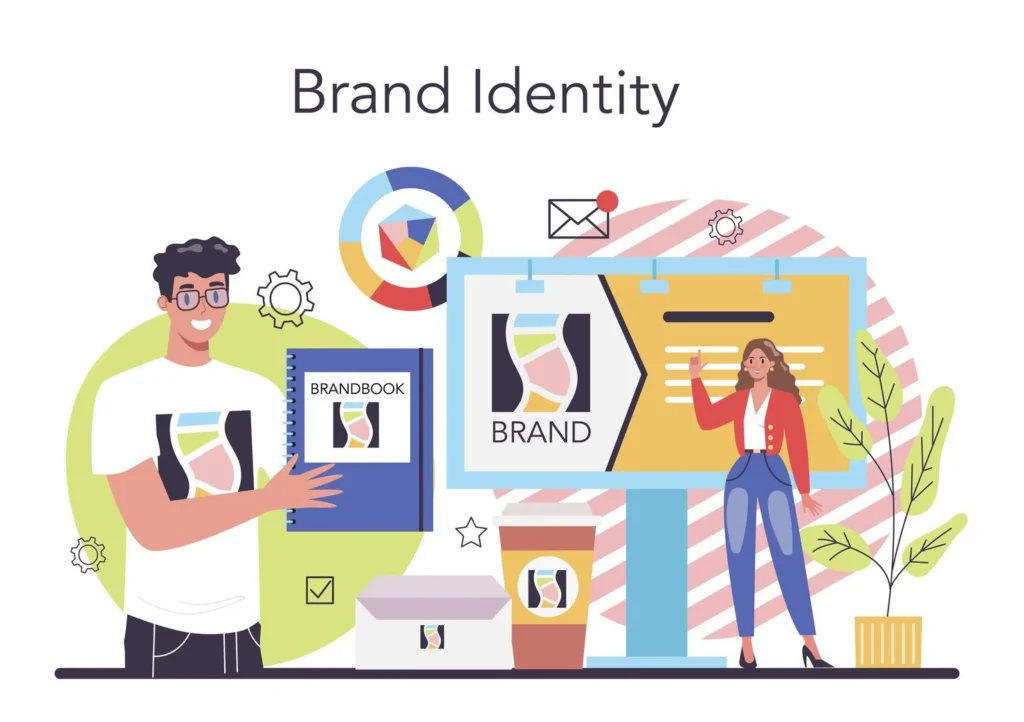
Brand identity is the designed expression of your brand. It is the full system of visual and verbal elements that communicate who you are before a single word of copy lands.
A professional brand identity design service builds this system from strategy down, never from aesthetics up. Here is what goes into a complete brand identity.
Logo and Visual Mark
Your logo is the anchor. It needs to be distinctive, scalable, and specific to your brand personality. The best logos look deceptively simple because the thinking behind them is anything but. Think of the most iconic logos in the world. None of them are trying too hard.
Colour Palette
Colour is emotional and cognitive at the same time. The right colour system creates instant recognition, differentiates you from competitors in your category, and communicates personality without a single word. A thorough brand identity design service will build a colour system that works across digital, print, packaging, and every environment your brand lives in.
Typography
Typefaces carry personality. A sharp modern sans-serif communicates something completely different from a classic serif. Your type system needs to be expressive enough to reflect your brand and functional enough to work at every size across every context.
Visual Language
This is the wider visual world your brand inhabits. Photography style, illustration, layout principles, graphic devices. The best brands have a visual language so coherent and distinctive that you recognise them instantly even without the logo present.
Tone of Voice
This is where brand identity crosses from visual into verbal. How does your brand sound? What is its register? What words does it use and which ones does it avoid? Tone of voice governs everything from your website headlines to your Instagram captions to how your team responds to a customer complaint. It is not a detail. It is the difference between a brand that feels like a person and one that feels like a corporation.
Brand design, at its best, is all of these elements working together as a system. Not a logo with a mood board attached. A real, coherent, intentional identity that makes your brand unmistakable.
Brand Strategy: The Work That Makes Everything Else Worth Doing
If brand identity is the expression, brand strategy is the foundation. And every serious branding company will tell you the same thing: strategy comes before design, every single time.
Brand strategy services are the process of making the foundational decisions about who your brand is, what it stands for, and how it is going to compete. Without this layer, your brand identity is just decoration.
Here is what a solid branding strategy covers.
Brand Positioning. Where do you sit in the market? What specific idea do you want to own in your audience's mind? Positioning is the strategic heart of a brand. It is the choice you make about which battle you are going to fight and which ones you are going to leave to someone else.
Brand Purpose. Why does your business exist beyond making money? A clear purpose gives your brand direction, makes decisions easier, and gives customers something to connect with beyond product features.
Brand Values. The principles that actually shape how your business operates. Not aspirational statements for the about page but real filters that influence who you hire, what you build, and how you treat people.
Brand Personality. The human characteristics your brand embodies. Defining this gives you the consistency you need to communicate effectively across every format and context.
Target Audience. Who is this brand for? More importantly, who is it not for? The clearer your audience definition, the more precisely your brand can speak directly to the people who will actually love what you do.
This is the work that separates a branding and marketing agency worth working with from one that just makes things look nice. Strategy first. Always.
How to Build a Brand: The Full Sequence
How to build a brand is less a mystery and more a sequence. Getting the steps in the right order matters.
Brand Discovery. Before you build anything, understand where you are starting from. Audit your existing brand, research your audience deeply, and map your competitive landscape honestly.
Brand Strategy. Lock in your positioning, purpose, values, personality, and audience. This is the foundation everything else is built on.
Brand Identity Development. With strategy as the brief, build the visual and verbal identity system. Logo, colour, typography, visual language, tone of voice. Every design decision should trace back to the strategy.
Brand Guidelines. Document everything. Brand guidelines are what make consistency possible as the business grows, hires, and works with external partners and agencies.
Brand Activation. Apply the brand everywhere. Website, social media, packaging, pitch decks, sales collateral, email signatures, office environment, customer communications. Consistency is where brand value is actually built.
Brand Management. Monitor, protect, and evolve. A brand is not a set-and-forget project. It needs to be actively managed, adapted as the business grows, and protected from the slow drift into inconsistency that affects most brands over time.
This is the complete picture of what proper brand development services deliver when they are done right.
How to Build a Strong Brand Identity Through a Brand Story Worth Telling
Here is something the best brands understand that most businesses do not. People do not connect with products. They connect with stories. A brand story is not a company history or a founder biography. It is the narrative framework that explains why your brand exists, what it believes, and why any of that matters to the people it serves.
How to build a strong brand identity through storytelling comes down to a few things.
Start with the problem your brand was created to solve. Every compelling brand story has tension at its centre. What was wrong with the world, or your category, before you showed up? That tension is what makes the story interesting.
Make your customer the hero. This is the most important shift most brands need to make. Stop casting your brand as the hero of the story. Your customer is the hero. You are the guide. The moment you make that switch, your brand story becomes dramatically more relatable and effective.
Be specific and honest. Vague inspiration does not build trust. Specificity does. The more concrete and real your story is, the more believable it becomes.
Make it consistent. Your brand story should live in your website copy, your social content, your pitch presentations, and your customer conversations. One story, everywhere, all the time.
Brand Awareness Strategies That Compound Over Time
Brand awareness is the starting point of every customer relationship. You cannot be considered by someone who does not know you exist. These are the brand awareness strategies worth building into your long-term brand plan.
Consistent Brand Presence. The most underrated strategy in the book. Showing up with the same visual identity, the same tone, and the same message across every channel is what builds recognition over time. Consistency is not boring. It is powerful.
Content That Creates Real Value. Brands that publish genuinely useful, relevant content build awareness and credibility simultaneously. A strong blog, newsletter, video series, or social presence keeps you visible between purchase cycles and positions you as the authority in your category.
Earned Media and PR. Being featured in publications, podcasts, and platforms that your audience already trusts is one of the most credible forms of brand awareness. Third-party validation is difficult to manufacture and very powerful when you earn it.
Community and Social Proof. When real customers talk about your brand publicly, that is worth more than any ad you could run. Build experiences worth sharing. Make your customers feel like they are part of something. The community that forms around a strong brand is one of its most durable competitive advantages.
Strategic Partnerships. Collaborating with brands that share your audience but do not compete with you is one of the most efficient ways to expand your reach. A good partnership introduces your brand to a warm, relevant audience that you would have otherwise had to spend significantly to reach.
The Role of Branding in Marketing Strategy
Let us settle this once and for all. Branding and marketing are not the same thing. Branding defines who you are. Marketing communicates that to the world and drives action. The role of branding in marketing strategy is to give every marketing effort a strong, consistent, and meaningful platform to operate from.
Without strong branding, marketing is inefficient. Every campaign has to establish credibility from scratch. Every ad has to fight for trust that a strong brand would have already built. The result is higher acquisition costs, lower conversion rates, and a marketing function that is constantly pushing a boulder uphill.
With strong branding, marketing compounds. Each touchpoint builds on the recognition and trust that came before it. Campaigns feel coherent rather than scattered. Customers move through the funnel faster because the brand has already done the heavy lifting of credibility.
The best branding and marketing agency relationships understand this deeply. Brand strategy gives marketing direction and meaning. Marketing gives brand strategy reach and momentum. Together, they produce results that neither discipline can achieve alone.
How to Choose a Branding Agency: What Actually Matters
There are a lot of branding agencies, branding studios, branding firms, and graphic design agencies out there. Knowing how to find the best branding agencies for your specific situation comes down to a few things that genuinely matter.
Strategy before aesthetics. The top branding agencies lead with thinking before design. If an agency shows you logo concepts before it has asked about your business, your audience, and your competitive landscape, that is a red flag. Pretty without purpose is just decoration.
A process you can understand. Great branding companies have a clear, explainable process. They can tell you exactly what you will do together, in what order, and why. If the process is vague at the pitch stage, expect it to be vague in delivery too.
Work that does a real job. When you look at a portfolio, ask yourself whether the work is actually doing something. Is each brand distinctive? Does it communicate something specific and true? Does it look like it could only belong to that business? The best branding agencies produce work that answers yes to all three.
Communication that is honest and proactive. How an agency communicates before you sign is a strong signal of how they will communicate throughout the project. You want directness, clarity, and genuine investment in your business, not just your budget.
Whether you are looking at a branding agency in Bangalore, a global brand design firm, or a specialist brand strategy consultancy, these filters will help you find the right fit.
Frequently Asked Questions
1. What is the difference between branding and marketing?
Branding defines who you are as a business. Your identity, your values, your promise, your personality. Marketing is how you communicate that to the world and drive action. Branding is the foundation. Marketing is what you build on top of it. The best results come when both are aligned and genuinely working together.
2. How long does it take to build a brand?
A branding project with a professional agency typically takes between 6 and 16 weeks depending on scope. Building real brand equity, the kind of recognition and trust that makes a brand genuinely valuable, takes years of consistent delivery. The design work is the beginning of that process, not the end.
3. What should I look for in a branding agency in Bangalore, India?
Look for strategic depth, a clear and explainable process, a portfolio that demonstrates real differentiation, and a team that communicates with honesty and directness. The best branding agencies treat strategy as seriously as aesthetics, every time.
4. Is rebranding worth it if my current brand is not working?
Almost always yes. Rebranding is one of the highest-leverage investments a business can make when the current brand no longer reflects the quality, ambition, or positioning of the business. A good branding company will help you understand what to keep, what to evolve, and what to leave behind entirely.
5. How is brand identity different from brand image?
Brand identity is what you put out intentionally, your logo, your colour, your messaging, your tone. Brand image is what people actually perceive, their mental impression of your brand based on every interaction they have had with it. Great branding closes the gap between the two.