







Every business communicates something. The question is whether that communication is intentional or accidental.
Brand identity is what makes the difference. It is the designed system that shapes how your business is seen, felt, and remembered. It is the reason people recognise a brand in a scroll without reading the name. It is the reason some businesses feel premium and others feel forgettable despite doing the same thing. And it is one of the most powerful, most underdeveloped assets in most businesses today.
This is the complete brand identity guide. By the time you finish reading it, you will know exactly what brand identity is, why it matters, what goes into building one properly, and what the most forward-thinking brands are doing with it in 2026.
Key Takeaways
Brand identity is the full system of visual and verbal elements that expresses your brand strategy consistently across every touchpoint. It is the logo, colour, typography, visual language, tone of voice, and messaging framework working together as a coherent whole.
The brand identity definition goes beyond aesthetics. It is the designed bridge between your strategy and your audience. Every element communicates something. The question is whether those communications are intentional and working in your favour.
Brand identity vs branding difference matters. Branding is the full strategic process. Brand identity is one critical output of that process. One is the thinking. The other is the expression.
Why brand identity is important comes down to recognition, credibility, pricing power, consistency, and differentiation. It is a commercial asset with measurable impact on revenue, margin, and growth.
The elements of brand identity include logo, colour palette, typography, visual language, tone of voice, and messaging framework. All of them need to work as a system, not a collection of individual assets.
Steps to create brand identity always start with strategy. Positioning, audience, values, and personality must be defined before any design work begins.
AI in branding and brand identity is changing how identities are built and managed but it is not replacing the strategic thinking that makes them meaningful.
Emotional branding and brand identity is where the most powerful brands operate. Brands that make people feel something generate loyalty and advocacy that cannot be bought.
Brand Identity Definition: What It Actually Means
Let us start with the brand identity definition that actually holds up.
Brand identity is the full system of visual and verbal elements that a business uses to express itself consistently across every touchpoint. It is the logo, the colours, the typography, the visual language, the tone of voice, and the messaging framework that collectively tell the world who you are, what you stand for, and why you are different.
The brand identity meaning goes deeper than aesthetics. It is not just about looking good. It is about communicating something specific and true about your business in a way that is immediately understood and consistently experienced. Every element of your brand identity is making a statement. The question is whether those statements are coherent, intentional, and working in your favour.
Brand identity for business is the designed bridge between your brand strategy and the people you are trying to reach. Strategy defines what you stand for. Brand identity expresses it in a way that people can see, read, and feel.
Brand Identity vs Branding: Understanding the Difference
This is one of the most common points of confusion worth clearing up directly. Brand identity vs branding difference is not a trivial distinction.
Branding is the full strategic and experiential process of shaping how people perceive your business. It covers everything from your positioning and purpose to your customer experience and culture. Branding is the thinking, the decisions, the commitment, and the ongoing work.
Brand identity is one critical output of that process. It is the visual and verbal system that expresses your brand strategy in a tangible, designed form. You cannot have a strong brand identity without good branding strategy behind it. And you cannot have effective branding without a well-executed brand identity expressing it.
Think of it this way. Branding is the architect. Brand identity is the building. One designs the vision and the structure. The other is what people actually walk into and experience.
Visual identity vs brand identity is another distinction worth making. Visual identity is the subset of brand identity that covers purely the visual elements: logo, colour, typography, and imagery. Brand identity is broader. It includes the verbal dimension too: tone of voice, messaging, brand story, and the language your brand uses to communicate. Both matter. Neither is sufficient on its own.
For the full picture of how brand identity fits into the wider branding process, read our complete guide: The Ultimate Guide to Branding.
Why Brand Identity Is Important: The Real Business Case
Why brand identity is important is a question with a very practical answer. Brand identity is the mechanism through which your brand strategy creates commercial value.
Here is what strong brand identity actually does for a business.
It creates recognition before a word is read. The most valuable thing a brand identity can do is make your business instantly identifiable. When someone scrolls past your content, encounters your packaging, or lands on your website, they should know it is you before they process any information. That instant recognition is built through a consistent, distinctive identity applied repeatedly over time.
It builds credibility and perceived value. People judge quality by what they can see before they experience what they cannot. A business with a strong, coherent brand identity is perceived as more professional, more credible, and more worth paying for than one that looks inconsistent or generic. This is the importance of brand identity in its most direct commercial form.
It enables premium positioning. Benefits of strong brand identity include pricing power. When your brand looks and feels premium, you can charge premium prices. The gap between a ₹500 product and a ₹5,000 product in the same category is almost always a brand identity gap. How brand identity affects business growth is most visible here, in the margin expansion that comes from strong brand perception.
It creates consistency across a growing team. As a business scales, brand identity is what keeps every piece of communication feeling like it comes from the same place. Without it, inconsistency creeps in and erodes the trust you have built.
It differentiates you in a crowded market. In categories where products and services are increasingly similar, brand identity is often the most durable competitive advantage available. You can copy a product. You cannot easily copy a brand.
Elements of Brand Identity Explained
A complete brand identity is built from several interconnected elements. Here is what each one does and why it matters.
Logo and Visual Mark
The logo is the anchor of the entire identity system. It is the most concentrated expression of your brand in a single mark. A great logo is distinctive enough to be ownable, simple enough to be versatile, and specific enough that it could not belong to any other brand. It needs to work at every scale, from a browser favicon to a building signage.
Colour Palette
Colour does more communicative work than most businesses realise. It triggers emotional associations, creates instant recognition, and differentiates you from competitors before any other element registers. A well-built colour system includes primary, secondary, and accent colours with clear rules for how each is used across different contexts and backgrounds.
Typography
Your type choices carry personality. A sharp geometric sans-serif communicates something completely different from a warm humanist one. A classic serif says something different from a modern variable font. Your typography system needs to be expressive enough to reflect your brand character and functional enough to work across every format and size.
Visual Language
This is the wider visual world your brand inhabits. Photography direction, illustration style, iconography, layout principles, and graphic devices. The strongest brands have a visual language so coherent that you can identify them without the logo present. This is what turns a brand identity into a recognisable world rather than a collection of assets.
Tone of Voice
This is the verbal dimension of brand identity and it is as critical as any visual element. Tone of voice defines how your brand sounds across every written and spoken communication. What register does it use? What words does it favour? What rhythm does it have? A well-defined tone of voice makes your brand feel like a consistent, recognisable personality across your website, social media, emails, and customer interactions.
Messaging Framework
This covers your brand positioning statement, key messages, tagline, and the core narrative your brand uses to explain itself. It is the verbal architecture that gives your team consistent language for talking about your business in any context.
Steps to Create Brand Identity: A Practical Framework
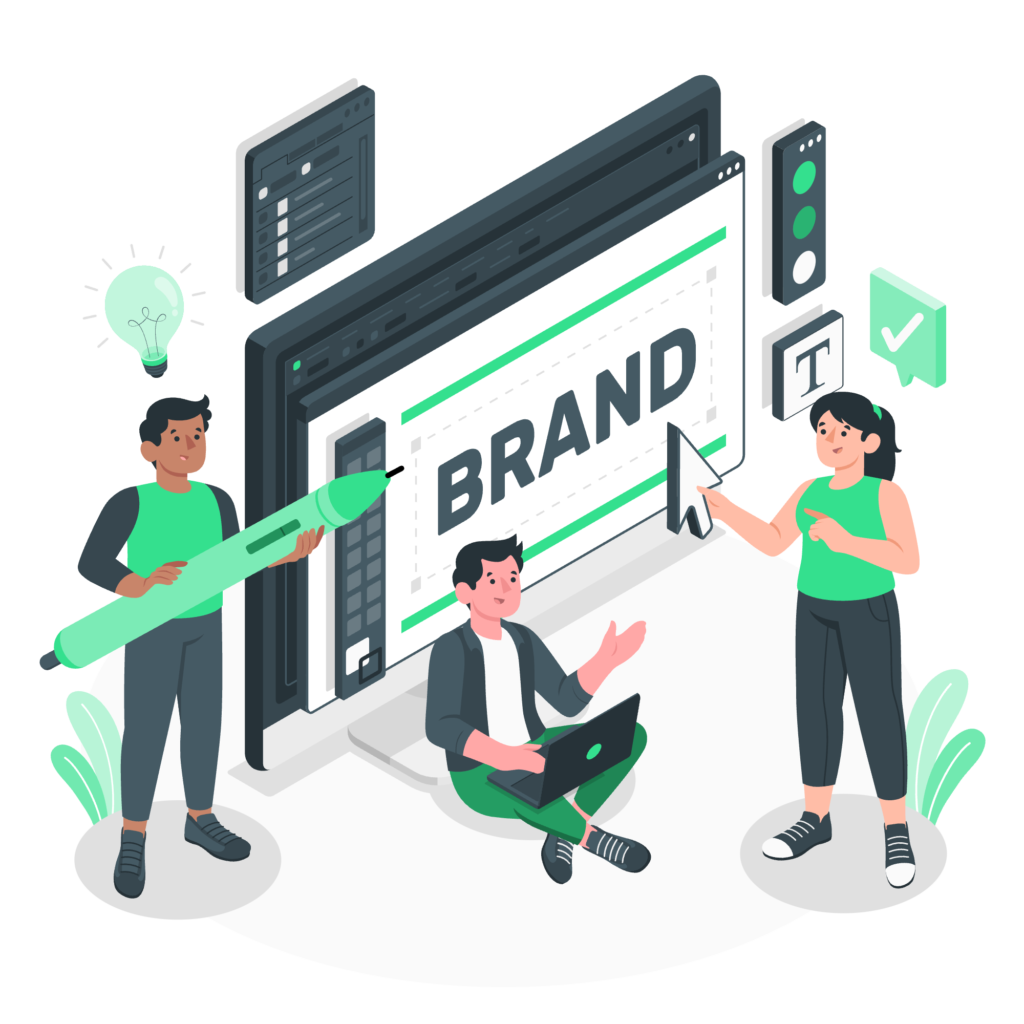
Here is a clear, step by step framework for how to build a strong brand identity that actually works.
Step 1: Start with brand strategy. Brand identity is always the expression of brand strategy. Before any design work begins, you need clarity on your positioning, your audience, your values, and your brand personality. Identity without strategy is just decoration.
Step 2: Audit what exists. If you already have a brand identity, audit it honestly. What is working? What is not? What does it communicate and does that match what you want it to communicate?
Step 3: Research your competitive landscape. Map how competitors are expressing themselves visually and verbally. You want to differentiate, not imitate. Find the visual and verbal territory that is both true to your brand and genuinely distinct in your category.
Step 4: Design the visual system. With strategy and competitive context in place, design the logo, colour palette, typography, and visual language as a connected system, not a collection of individual assets.
Step 5: Define the verbal system. Develop your tone of voice guidelines and messaging framework. Define how your brand sounds and what it consistently says.
Step 6: Build your brand guidelines. Document every element, every rule, and every application example in a comprehensive brand guidelines document. This is what makes consistency scalable.
Step 7: Activate and apply. Roll out the identity across every touchpoint. Website, social media, packaging, pitch decks, email templates, office environment, and customer communications. Consistency is where brand value is actually built.
Brand identity strategy for small business follows the same sequence. The scope might be tighter but the steps are identical and equally important.
Personal Brand Identity Building: The Same Rules, Different Scale
Personal brand identity building follows the same principles as business brand identity, applied to an individual rather than an organisation.
For founders, consultants, executives, and creators, a strong personal brand identity communicates credibility, expertise, and personality before a single conversation happens. It shapes how people find you, what they expect from you, and whether they trust you enough to work with you, follow you, or buy from you.
The elements are the same: a consistent visual presence, a distinct tone of voice, a clear positioning, and a compelling story. The difference is that the brand is built around a person rather than a product or service, which means authenticity carries even more weight. A personal brand that feels manufactured erodes trust faster than a corporate one.
AI in Branding and Brand Identity: What Is Changing in 2026
AI in branding and brand identity is no longer a future conversation. It is a present one and it is reshaping how brand identities are built, managed, and evolved.
In 2026, AI tools are being used across the branding process in ways that are genuinely significant. Generative design tools are accelerating the exploration phase of brand identity development, allowing designers to test more directions faster. AI-driven personalisation is enabling brands to adapt their visual and verbal expression dynamically across different audience segments without losing core identity coherence.
Brand identity for startups 2026 means something different from what it meant five years ago. The barrier to producing polished-looking visual assets has dropped significantly. Which means that genuine distinctiveness, the kind that comes from real strategic thinking and original creative direction, is more valuable than ever. When anyone can generate a decent-looking logo, the brands that invest in real depth and real differentiation stand further apart.
What AI cannot replace is the strategic thinking that makes a brand identity meaningful. The positioning decisions, the audience insights, the competitive differentiation, the brand story. Those remain entirely human work and they remain the foundation on which everything else is built.
Emotional Branding and Brand Identity: The Dimension Most Businesses Miss
Emotional branding and brand identity is where the most powerful brands operate and where most businesses leave significant value on the table.
Emotional branding is the practice of building brand identity around the feelings you want to create in your audience, not just the information you want to communicate. It is the difference between a brand that people understand and a brand that people feel something about. And the brands that people feel something about are the ones that generate loyalty, word of mouth, and the kind of advocacy that no amount of paid media can manufacture.
Brand storytelling and identity is the primary vehicle for emotional branding. The most effective brand identities are not just visually coherent. They are narratively coherent. They tell a consistent story through every element, from the logo to the copy to the photography to the customer experience. That narrative is what creates emotional resonance and that resonance is what makes a brand truly memorable.
Minimalist brand identity design has become one of the dominant expressions of emotional branding in recent years, particularly in premium and lifestyle categories. The restraint of a minimalist identity communicates confidence, clarity, and sophistication. It says we do not need to shout because we know exactly who we are. That confidence is itself an emotional signal.
Digital Brand Identity Strategy: Building for a Multi-Channel World
A digital brand identity strategy is not a separate thing from brand identity. It is brand identity applied with intelligence to a digital-first, multi-channel world.
In practice, this means building a brand identity that works at every digital scale, from a 16x16 favicon to a full-screen hero image, and across every digital context, from a dark mode interface to a light one, from a static post to a motion asset. It means having a visual language that is expressive enough to create recognition in a fast-moving social feed and restrained enough to feel premium on a website.
It also means consistency across an increasingly complex set of touchpoints. Website, social media, email, digital advertising, app interfaces, and video content all need to feel like the same brand. The digital brand identity strategy that makes this possible is not just about having good assets. It is about having clear rules for how those assets are used, adapted, and extended across every context.
Frequently Asked Questions
1. What is brand identity and why is it important?
Brand identity is the system of visual and verbal elements that expresses your brand consistently across every touchpoint. It is important because it creates recognition, builds credibility, enables premium pricing, and differentiates your business in a crowded market. It is the mechanism through which your brand strategy creates commercial value.
2. What is the difference between brand identity and branding?
Branding is the full strategic process of shaping how people perceive your business. Brand identity is the designed output of that process, the visual and verbal system that expresses your brand strategy. Branding is the thinking. Brand identity is the expression.
3. How do I build a strong brand identity for my business?
Start with brand strategy. Define your positioning, audience, values, and personality before any design work begins. Then build the visual and verbal identity system as a connected whole, document it in brand guidelines, and apply it consistently across every touchpoint.
4. How does brand identity affect business growth?
Strong brand identity drives growth by creating recognition that reduces marketing costs, building perceived value that supports premium pricing, creating consistency that scales as the team grows, and differentiating the business in ways that are difficult for competitors to replicate.
5. What is digital brand identity strategy?
Digital brand identity strategy is the application of brand identity principles to a multi-channel digital world. It involves building an identity that works at every digital scale and across every digital context, with clear rules for how visual and verbal elements are adapted and applied consistently across every digital touchpoint.